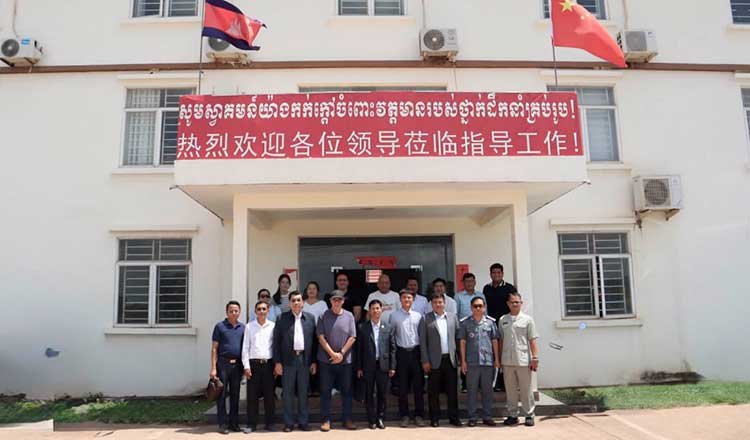
KRATIE, CAMBODIA — A high-level Cambodian-Vietnamese business delegation completed a strategic study tour of the Snoul Special Economic Zone (SEZ) in Kratie province. The cross-border mission focused entirely on expanding industrial cooperation, boosting regional logistics networks, and setting up advanced agro-processing facilities.
According to an official statement released by Cambodia’s Commercial Office in Ho Chi Minh City, the visiting delegation of Vietnamese investors was led by Ho Daret, Commercial Attaché at the Royal Embassy of Cambodia in Vietnam.
Driving Industrial and Supply Chain Integration
Organized in close collaboration with the Kratie Provincial Administration, the visit brought private sector organizations and corporate leaders from both nations together. The primary goal was to analyze how the economic zone can act as a catalyst for deeper bilateral trade.
During the tour, the delegates reviewed the SEZ’s existing core assets, including:
- Transport Connectivity: Evaluating swift access to cross-border transit routes.
- Logistics Networks: Assessing warehousing, storage, and distribution efficiency.
- Incentive Policies: Analyzing tax breaks and corporate legal frameworks designed to draw high-quality international investment.
Cambodian officials noted that these combined factors establish a highly competitive foundation for regional supply chain integration.
Joint Venture Plans for Cashew and Mango Processing
A major highlight of the bilateral discussions involved adding value to Cambodia’s rich agricultural yields. Specifically, the two sides discussed plans to jointly build cashew nut and mango processing factories directly within Kratie province.
Currently, a significant portion of Cambodia’s raw harvests are exported with minimal domestic processing. By building these modern factories, the proposed projects will strengthen domestic value chains, lower export redundancies, and help Cambodian agricultural products compete on a global scale.
Boosting the Natural Rubber and Tire Manufacturing Sector
Beyond fruit processing, the delegation mapped out major expansions within the industrial rubber sector. Cambodian officials expressed strong interest in increasing the supply of locally harvested natural rubber to an active tire manufacturing plant operating inside the Snoul SEZ.
This strategic initiative aims to maximize the consumption of domestic raw materials. By feeding local rubber latex directly into complex automotive manufacturing pipelines, the project will enhance value-added manufacturing while linking Cambodia’s agricultural base with international industrial markets.
Also Read, Toyota Cambodia Plant Marks Major Milestone with First Entirely Locally Assembled Hilux Travo