BATTAMBANG — Amid persistent global market fluctuations affecting fuel prices, the Royal Government of Cambodia is actively deploying comprehensive fiscal interventions and relief measures to mitigate the energy cost burden on citizens and businesses.
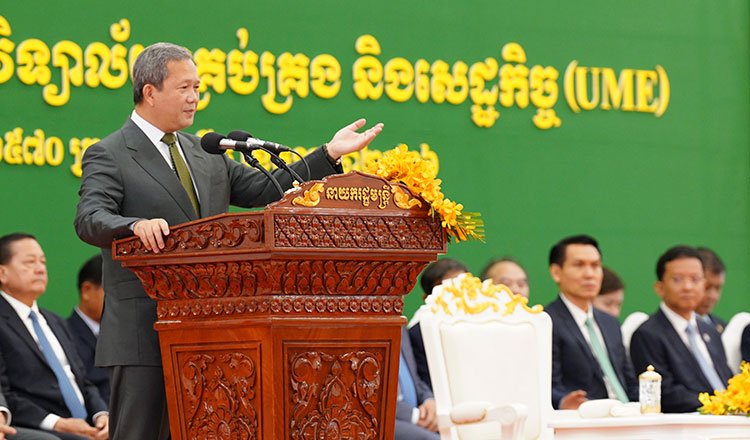
Speaking during a public address, Prime Minister Hun Manet emphasized that ongoing state interventions are vital to cushioning domestic markets against external shocks and controlling broader inflationary pressures.
Mitigating Global Price Surges
Recent data from the Ministry of Commerce highlights the impact of international cost pressures, with regular petrol and diesel prices registering notable upward adjustments compared to pre-conflict benchmarks.
- Direct Relief: Existing government stabilization measures currently offset roughly 9% to 10% of potential cost spikes, preventing sharper retail price increases at the pump.
- Fiscal Subsidies: Strategic interventions—including reduced import duties, lower taxes on energy products, and targeted tariff relief on electric vehicles (EVs) and solar appliances—have helped protect consumer purchasing power.
- Long-Term Transition: Alongside short-term fiscal buffers, Cambodia continues to fast-track its green energy roadmap. According to the Ministry of Mines and Energy, renewable sources—anchored by hydropower and solar installations—accounted for over 63% of total domestic electricity generation, with an official target to reach at least 70% by 2030.
As global economic uncertainties persist, the administration remains committed to balancing immediate fiscal support with sustainable, long-term energy security strategies.
Also Read, Cambodia Advances 10-Year TVET Policy Amid Rising Demand for Skilled Workers