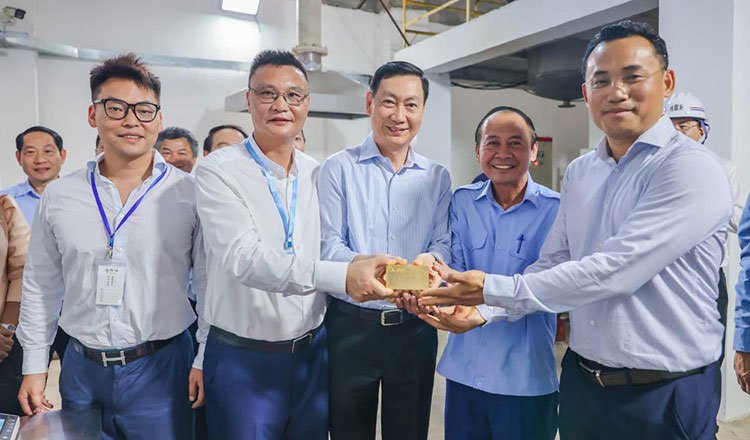
PHNOM PENH, CAMBODIA — Cambodia’s commercial gold mining operations reached a major structural milestone by producing approximately 20 tonnes of semi-refined gold dore bars. The General Department of Mineral Resources confirmed that this aggregate volume was extracted between June 2021 and June 2026. According to the official disclosure, the minted dore bars maintain a standard 90 percent pure gold solution. This output underscores the nation’s steady shift toward a highly regulated, industrial extractive economy.
Consequently, the rapid formalization of this heavy industry continues to unlock vital non-tax revenue streams for the state treasury. Government data indicates that the industrial mining framework effectively creates local employment while directly funding provincial infrastructure projects.
Expanding Refining Networks and Regional Production Nodes
During a formal ministry press briefing, Director-General Ung Dipola announced the five-year manufacturing totals to the public. Currently, the Ministry of Mines and Energy licenses seven commercial operations to extract and refine gold across the country. These formal operations are systematically distributed across several mineral-rich provinces:
- Primary Active Zones: Licensed operations actively refine gold deposits in Mondulkiri, Kratie, Preah Vihear, and Kampong Thom provinces.
- Commercial Pioneer: Renaissance Minerals (Cambodia) Ltd, a subsidiary of Australia’s Emerald Resources NL, remains the largest producer since starting operations in mid-2021.
- Operational Footprint: Additional state-regulated mining concessions operate inside the borders of Ratanakiri and Battambang provinces.
Furthermore, the ministry reported that cumulative asset investment in the country’s mining infrastructure has reached $2.89 billion. This massive capital deployment supports over 12,000 direct industrial jobs. Crucially, local Cambodian nationals fill 11,547 of those positions, accounting for roughly 95 percent of the mining workforce.
Escalating Non-Tax Revenue and Regulatory Governance
The financial impact of this industrial growth path remains significant for the developing nation. Specifically, the Ministry of Mines and Energy collected over $93 million in non-tax revenue from all mining asset operations in the first half of 2026 alone. This aggregate figure completely excludes additional corporate income taxes, custom import duties, and separate registration fees. To illustrate the sector’s rapid growth, annual non-tax mining revenues jumped from just $13 million in 2016 to an impressive $135 million by the end of 2025.
Nevertheless, economic researchers suggest that the extraction boom serves as a helpful fiscal cushion rather than a replacement for primary economic pillars like garment manufacturing and tourism.
“The real measure of success for this boom won’t just be the volume of gold extracted,” explained Thong Mengdavid, a regional studies deputy director. He noted that success depends heavily on how effectively the state enforces strict environmental safeguards to shield local communities and protect national biodiversity.
To address these long-term environmental concerns, the ministry stated that licensed companies must operate under strict health, safety, and community guidelines. Therefore, the government continues to clamp down on illegal, unregulated gold panning to maximize public resource returns.
Also Read, PM Hun Manet Outlines Cambodia Waterway and Highway Expansion