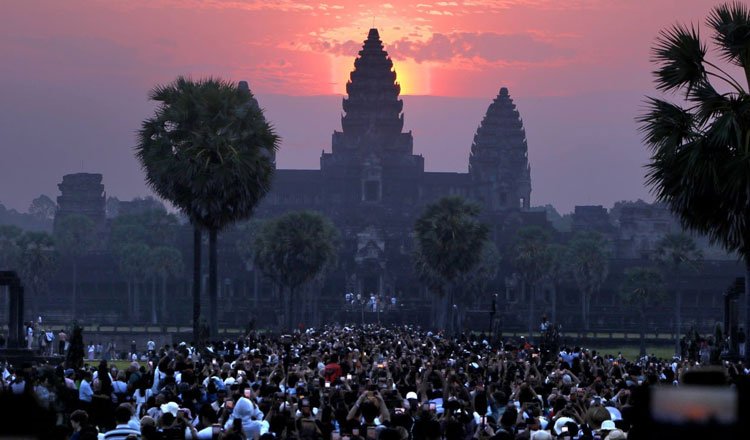
Thousands of visitors, including local residents and international tourists, gathered at Angkor Wat in Cambodia to witness the spring equinox sunrise, a biannual astronomical phenomenon that draws large crowds to the UNESCO heritage site. The event took place in the early hours, with spectators assembling before dawn to observe the alignment of the rising sun with the temple’s central tower.
The equinox occurs twice a year and is known for its unique visual effect, where the sun appears directly above the central spire of Angkor Wat, reflecting the architectural precision of the ancient Khmer civilization.
What Makes the Angkor Equinox Unique
The Angkor equinox is considered one of Cambodia’s most notable natural and cultural spectacles, combining astronomy with historical architecture.
Key characteristics of the event
- Sunrise aligns directly with the central tower of Angkor Wat
- Occurs during March and September each year
- Visible from the western entrance of the temple complex
- Attracts thousands of visitors before sunrise
- Offers significant opportunities for photography and tourism
The phenomenon highlights the advanced understanding of astronomy incorporated into Khmer temple design centuries ago.
Visitor Turnout and Tourism Significance
The equinox continues to attract growing numbers of visitors to Angkor Archaeological Park, one of Cambodia’s most visited destinations.
Observations from the event
- Large crowds gathered from early morning hours
- Mix of domestic and international tourists
- Increased activity in surrounding tourism services
- Continued promotion of Cambodia as a cultural tourism destination
Tourism authorities often promote the equinox as a key seasonal attraction to boost visitor numbers.
Event Snapshot
| Category | Details |
|---|---|
| Event | Spring Equinox Sunrise |
| Location | Angkor Wat, Siem Reap |
| Frequency | Twice yearly |
| Key Feature | Solar alignment with temple tower |
| Attendance | Thousands of visitors |
Cultural and Economic Relevance
The equinox event reflects Cambodia’s broader efforts to promote heritage tourism and preserve historical landmarks.
Key impacts include
- Strengthening Cambodia’s global tourism visibility
- Supporting local businesses and tourism services
- Encouraging cultural awareness and heritage preservation
- Boosting seasonal tourism activity in Siem Reap
Implications
Large-scale tourism events like the equinox can influence development trends in surrounding areas.
Potential impacts
- Increased demand for hotels, resorts, and homestays
- Growth in retail and hospitality spaces near Angkor
- Expansion of transport and tourism infrastructure
- Rising interest in tourism-linked real estate investments
Sustained visitor inflows often contribute to long-term infrastructure development in tourism hubs.
Key Takeaways
- Thousands gathered at Angkor Wat to witness the spring equinox
- The event showcases a rare solar alignment with temple architecture
- Continues to be a major tourism attraction in Cambodia
- Supports local economy and hospitality sector growth
Conclusion
The equinox at Angkor Wat continues to highlight the intersection of Cambodia’s cultural heritage and natural phenomena. The event not only draws significant tourist interest but also contributes to the ongoing development of tourism infrastructure and related economic sectors.
Also Read: Phnom Penh Autonomous Port (PPAP) Reports Profit Surge in Early 2026