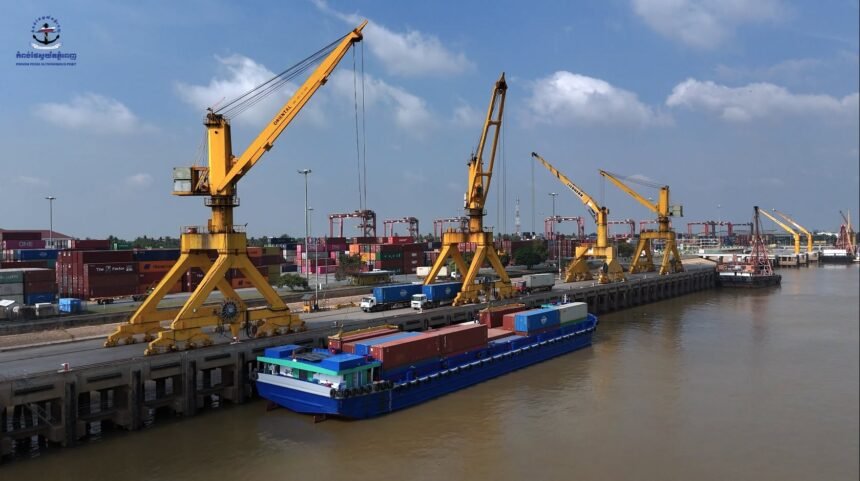
Maritime trade in Cambodia is experiencing an extraordinary period of growth. During the first five months of the year, the Phnom Penh Autonomous Port successfully processed over 270,000 TEUs of containers. This monumental shift represents a sharp volume increase of more than 30% compared to the exact same period in 2025.
Furthermore, a total of 1,782 cargo and passenger vessels safely called at the river port during this timeframe. These metrics signal a highly robust performance for Cambodia’s primary freshwater shipping gateway.
A Detailed Breakdown of Five-Month Shipping Volumes
According to an official press release issued on June 16, the facility experienced gains across all core operation categories from January to May. Specifically, the port handled 1,582 dedicated cargo vessels, which marks an increase of 7.04% year-on-year.
The comprehensive traffic data highlights several distinct milestones:
- Container Throughput: Reached 276,151 TEUs, climbing by 34.02% compared to 2025.
- Tonnage Volume: Handled 2,407,587 tonnes of cargo and fuel products, representing a steady 10.7% growth.
- Tourism Recovery: Welcomed 200 passenger boats, which is an increase of 8.7%.
- Passenger Footfall: Served 20,925 individual travelers passing through the docks, rising by 6.25%.
Hei Bavy, the director-general of the facility, attributed these gains directly to their workplace culture. He noted that the company remains deeply committed to providing highly transparent and efficient logistical services. Consequently, this reliable approach has enabled the team to respond effectively to changing customer needs.
Foreign Direct Investment Drives Cambodian Logistics Boom
This sustained upward trajectory is closely tied to wider macroeconomic trends. Chea Chandara, president of the Logistics Supply Chain & Brokers Business Association in Cambodia, explained that the country’s transport sector has expanded rapidly since late 2023. This boom is largely powered by increasing levels of foreign direct investment flowing into domestic manufacturing.
As local production lines scale up, both import and export cargo flows have naturally accelerated. Ultimately, regional businesses are choosing waterway transportation because it offers lower operational costs, eliminates highway traffic congestion, and safely accommodates larger volumes of goods.
Future Growth Powered by the Funan Techo Canal
Looking ahead, maritime experts expect commercial activities at the river port to accelerate even further. Analysts predict that traffic will heavily increase once the historic Funan Techo Canal project becomes fully operational.
The mega-infrastructure project will span 180 kilometers, seamlessly connecting inland river transport systems directly to deep-sea ports. By weaving through the provinces of Kandal, Takeo, Kampot, and Kep, the canal will position the port as a vital hub within Cambodia’s unified, low-cost maritime trade network.
Also Read, India’s 6th National Family Health Survey (NFHS-6)