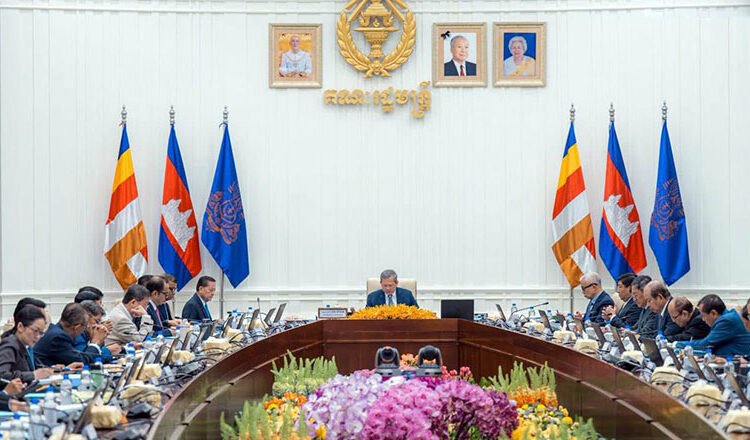
PHNOM PENH — The Cabinet of the Royal Government of Cambodia has officially approved a series of sweeping reforms designed to strengthen national economic resilience and deepen ASEAN integration. During a plenary meeting chaired by Prime Minister Hun Manet, ministers endorsed four vital draft laws and a new national action plan. Together, these measures aim to improve domestic competitiveness, facilitate cross-border trade, and support long-term economic growth.
The high-level decisions reflect the government’s dual approach to current economic challenges. While the administration works to address short-term pressures, it is simultaneously advancing deep legislative updates to position the country for sustainable development.
Safeguarding Social Protection and Workforce Productivity
Beyond pure trade frameworks, the Cabinet approved the “National Action Plan on the Prevention of Violence Against Women 2025-2030”. Officials described the plan as an essential move to strengthen social protection while safeguarding economic productivity. Notably, women account for the absolute majority of workers in Cambodia’s crucial garment, footwear, and travel goods sectors.
The government noted that preventing gender-based violence directly reduces workplace absenteeism and high employee turnover. Consequently, this social initiative will improve overall labor productivity and ease long-term healthcare and social costs for the state. Policy analysts have welcomed the integration, noting that women form the backbone of both the garment industry and many local small and medium-sized enterprises (SMEs).
Accelerating Aviation and ASEAN Trade Harmonization
To elevate the logistics and aviation sectors, the Cabinet endorsed a draft law approving Cambodia’s accession to the Cape Town Convention. Officially known as the “Convention on International Interests in Mobile Equipment,” this international protocol establishes clear rules specific to aircraft equipment. Accession will drastically improve aviation financing options as Cambodia continues expanding its international transit capabilities.
Furthermore, the Cabinet focused heavily on eliminating trade barriers within the region by passing three distinct ASEAN mutual recognition pacts:
- Product Testing Framework: A draft law on the “ASEAN Framework Agreement on Mutual Recognition Arrangements” to align certification and conformity assessment procedures.
- Building Materials: A draft law adopting the “ASEAN Mutual Recognition Arrangement for Building and Construction Materials,” allowing certified materials to be accepted across member states without duplicate testing.
- Automotive Sector: A draft law adopting the “ASEAN Mutual Recognition Arrangement on Type Approvals for Automotive Products,” facilitating regional trade in automotive components.
Experts suggest the automotive agreement is particularly significant. While the property market faces external challenges, Cambodia’s automotive and electric vehicle manufacturing hubs continue to expand rapidly due to foreign investment.
Addressing Shifting Tourism Dynamics
The Cabinet also reviewed progress on the “Visiting Cambodia in the Green Season 2026” campaign. The review follows a 47.8 percent year-on-year drop in international tourist arrivals, which fell to 1.54 million during the first five months of the year.
In response, the Royal Government stated that domestic tourism has become a vital source of emergency revenue for hotels, restaurants, and tourism-related SMEs. Moving forward, the administration will continue working under Phase One of the Pentagonal Strategy to diversify local tourism products, accelerate digital transformation, and upgrade the national hospitality workforce.
Also Read, Siem Reap Bolsters Investment Planning and Data Analysis for 2027–2029 Strategy