PHNOM PENH, CAMBODIA — The National Assembly of Cambodia has finalized its operational and strategic preparations to host the upcoming 9th Asia-Pacific Parliamentarian Forum on Global Health (9th APPF-GH). Scheduled to take place this August 2026, the high-level international gathering aims to bring together lawmakers, technical specialists, and global health authorities from nearly 30 countries across the region.
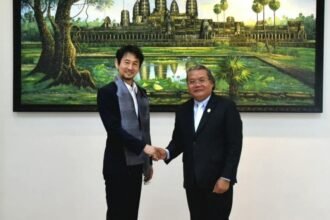
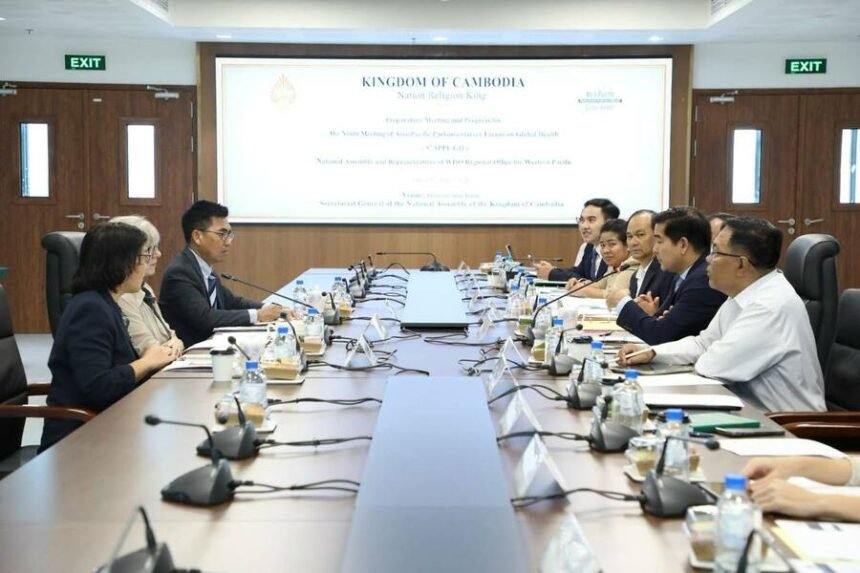
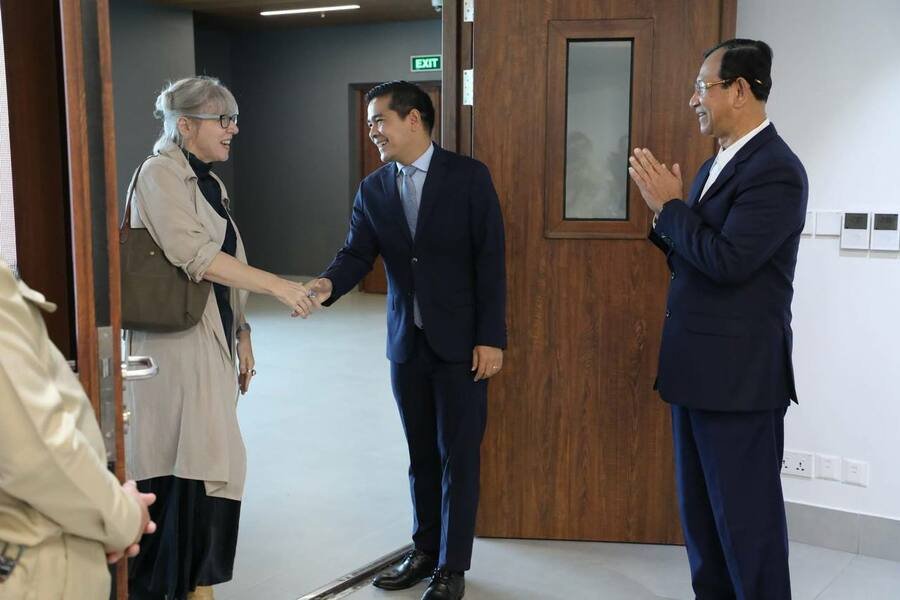
The state of readiness was officially confirmed during a bilateral coordination meeting held at the National Assembly Palace. The briefing involved H.E. Dr. Keo Piseth, Permanent Deputy Secretary-General of the National Assembly and Chief of Cabinet to the President of the National Assembly, alongside a regional delegation from the World Health Organisation (WHO) led by Dr. Genevieve Howse, Coordinator for Legislation and Governance at the WHO Western Pacific Regional Office (WHO WPRO).
Technical Coordination and Core Strategic Priorities
The working session allowed both domestic organizers and WHO coordinators to align technical agendas and finalize logistics. The delegation evaluated structural protocols, speaker matrices, and the foundational policy pathways guiding the forum.
Crucially, the forum will focus heavily on how regional lawmakers can scale up universal health coverage (UHC) while addressing modern structural disruptions, specifically:
- Climate Change Impact: Assessing regional vulnerabilities and engineering climate-resilient community health systems.
- Technological Integration: Evaluating the implementation, opportunities, and governance of artificial intelligence (AI) models within public health infrastructure.
Furthermore, the continuous structural meetings held across multi-departmental committees ensure that the event adheres to strict global diplomatic protocols, preserving the international reputations of both the host nation and the WHO.
Showcasing Local Health Achievements and Policy Leadership
Beyond interior panel discussions, the National Assembly has structured practical field visits to complement the policy talks. The Cambodian team briefed the WHO delegation on specialized tour programs mapping primary healthcare infrastructure in Kampot province. These site visits are explicitly designed to show how legislative budgeting translates to resilient, equitable, and grass-roots primary health networks.
The ultimate benchmark of the summit will be the formal review and eventual adoption of the Phnom Penh Communiqué (also referred to as the Phnom Penh Declaration). This historic framework is intended to serve as a policy compass, guiding regional parliaments as they enforce health laws, mobilize budgets, and demand executive transparency.
By managing the complex logistics of this prominent multilateral gathering, Cambodia’s National Assembly is demonstrating its growing influence in regional health governance, proving the country’s capability to steer essential global development conversations.