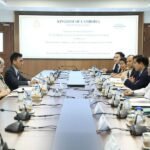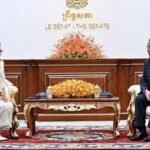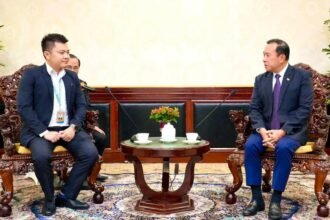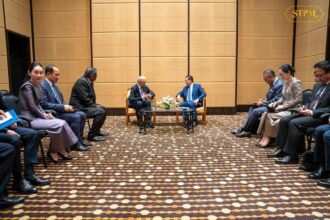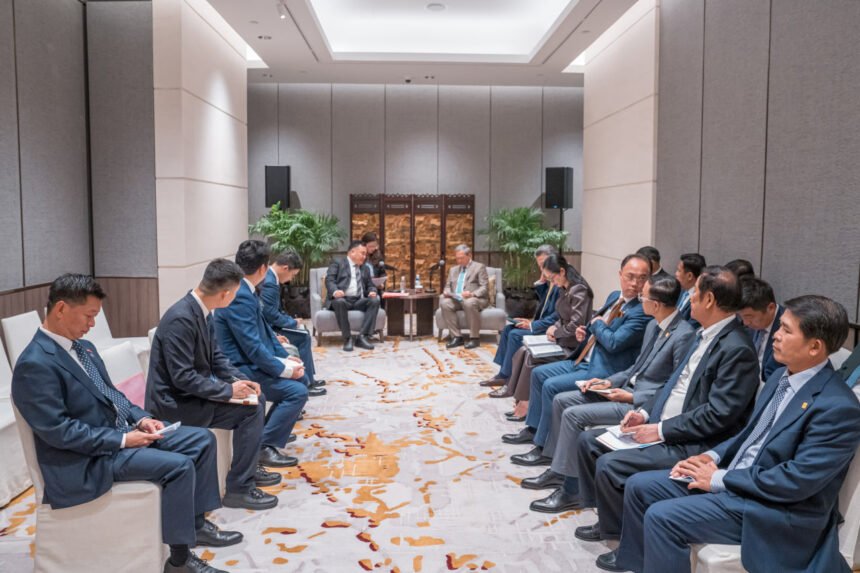
BEIJING, CHINA — On the sidelines of the World Artificial Intelligence Conference (WAIC) held in Beijing from July 15 to 17, 2026, Cambodian Prime Minister Samdech Moha Borvor Thipadei Hun Manet engaged in a series of high-level bilateral meetings with the leaders of China’s largest state-owned enterprises and private tech conglomerates.
- 1. Haier Group to Build Cambodia’s First Tablet Assembly Plant
- 2. CHINALCO Explores Domestic Steel Production and Mining
- 3. China Energy and CMEC Drive Cambodia’s Green Transition
- 4. Shandong Zone Expands Agro-Industrial Footprint in the Northeast
- 5. China Railway Construction Corp. (CRCC) Targets Rail Modernization
- Direct Government Support for Foreign Capital
These meetings concluded with six major Chinese industrial giants—spanning electronics, heavy metallurgy, clean energy, and transportation—unveiling major plans to scale up and diversify their investment footprints in Cambodia. Representing a major vote of confidence in Cambodia’s political stability and economic trajectory, these developments align with Cambodia’s broader push for digital transformation, industrial modernization, and green energy transition.
1. Haier Group to Build Cambodia’s First Tablet Assembly Plant
In a major breakthrough for Cambodia’s educational and digital landscape, Chinese electronics leader Haier Group announced its partnership with a local Cambodian company to build the Kingdom’s first-ever tablet assembly facility.
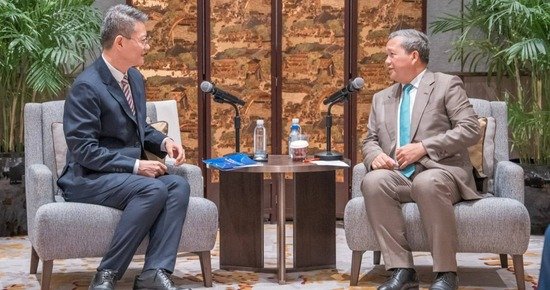
The initiative was presented by Mr. Diao Yunfeng, Vice Chairman of Haier Group. Operating in more than 60 countries with a global user base of 44 million, Haier aims to make personal computing highly accessible within the Southeast Asian country.
- Primary Target Audience: Students (to facilitate distance learning and digital curricula) and informal economy workers (to improve baseline digital literacy).
- Government Alignment: Prime Minister Hun Manet highly praised the project, emphasizing that localized tech manufacturing directly advances human resource development and aligns with the national digital transition agenda.
2. CHINALCO Explores Domestic Steel Production and Mining
The Aluminum Corporation of China (CHINALCO), represented by Chairman Wang Shilei, revealed that the state-owned giant is wrapping up feasibility studies in steel production and mineral resource development in Cambodia.
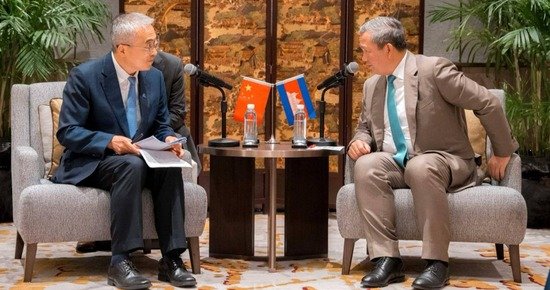
CHINALCO is looking to expand its scope beyond current projects into infrastructure construction, railway development, and special economic zones (SEZs). By introducing local steel manufacturing, the initiative aims to reduce Cambodia’s historic reliance on imported construction metals, directly driving down regional building costs.
3. China Energy and CMEC Drive Cambodia’s Green Transition
Clean energy was a dominant theme during the bilateral discussions. With Cambodia currently sourcing roughly 62% of its electricity from renewable sources, the government has set a target to raise this figure to 70% by 2030. Two Chinese energy giants are stepping in to help realize this objective:
China Energy International Group Co.
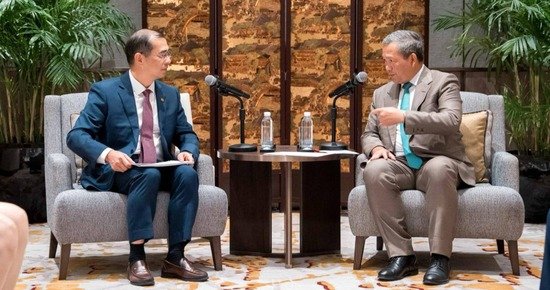
Led by Chairman Qiao Xubin, the firm is transitioning from traditional Engineering, Procurement, and Construction (EPC) power infrastructure contracts to direct investments. The group plans to diversify into:
- Utility-scale renewable energy installations.
- Municipal clean water treatment plants.
- Localized cement manufacturing.
China Machinery Engineering Corporation Group (CMEC)
CMEC President Fang Yanshui emphasized that Cambodia’s predictable political climate and strong GDP growth make it a highly secure market. CMEC is currently working with local partners to construct a Liquefied Natural Gas (LNG) power plant in Koh Kong province.
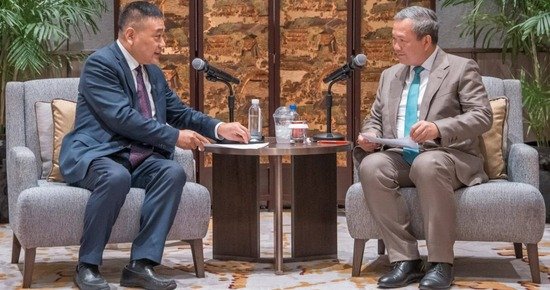
Strategic Vision: Prime Minister Hun Manet highlighted that robust domestic energy networks will not only satisfy local commercial demand but also position Cambodia to export clean energy to neighboring nations via the upcoming ASEAN Power Grid framework.
4. Shandong Zone Expands Agro-Industrial Footprint in the Northeast
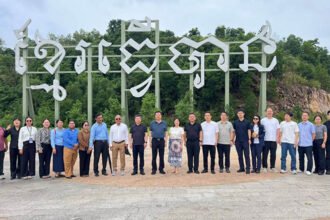
The Shandong (Cambodia) Economic and Technological Development Zone, represented by Mr. Wu Yujie, confirmed plans to scale up its operations. Active in Cambodia since 2012, the development zone has historically focused on industrial parks and agriculture, particularly cashew cultivation.
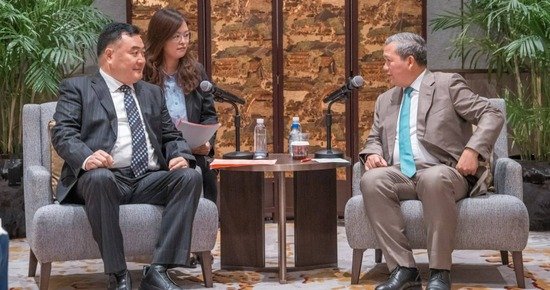
Prime Minister Hun Manet welcomed the expansion, urging the delegation to coordinate with agricultural authorities to develop value-added agro-industrial facilities in Cambodia’s northeastern provinces, where the government provides tailored investment incentives.
5. China Railway Construction Corp. (CRCC) Targets Rail Modernization
Having operated in Cambodia since 2008, China Railway Construction Corp. (CRCC) is planning a major expansion of its local portfolio. CRCC Chairman Dai Hegen highlighted the company’s past regional successes—such as the Battambang water supply system and the Cambodia-China Friendship Thbong Khmum Hospital—and outlined future focuses in transport, digital infrastructure, and renewable energy.
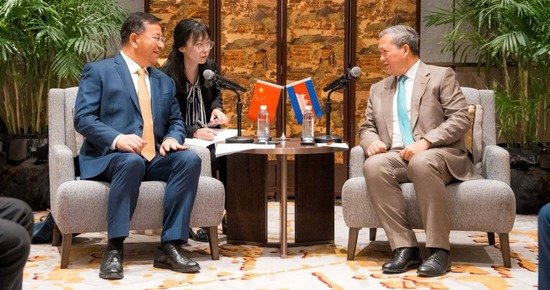
Prime Minister Hun Manet particularly welcomed CRCC’s interest in transportation, noting that while highway and waterway logistics have expanded rapidly over the last two decades, modernizing and expanding Cambodia’s railway network is now the administration’s top infrastructure priority.
Direct Government Support for Foreign Capital
Throughout the high-level meetings, Prime Minister Hun Manet reiterated that the Royal Government of Cambodia remains highly supportive, offering competitive incentive policies, robust legal frameworks, and direct ministerial cooperation to ensure that these corporate proposals translate into concrete, operational projects.