PHNOM PENH — Prime Minister Samdech Thipadei Hun Manet has outlined four major strategic recommendations for the Ministry of Education, Youth and Sport (MoEYS) to accelerate nationwide education reform. The directives focus on enhancing educational quality, promoting equity, expanding digital transformation, and fostering human capital development to align with Cambodia’s digital economy goals.
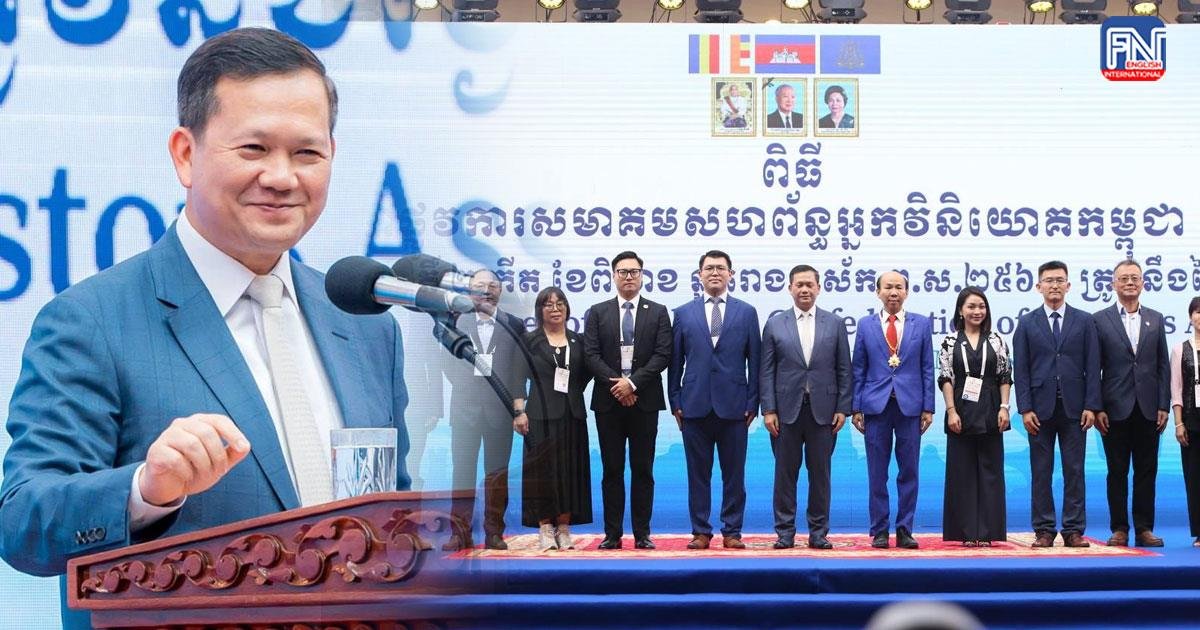
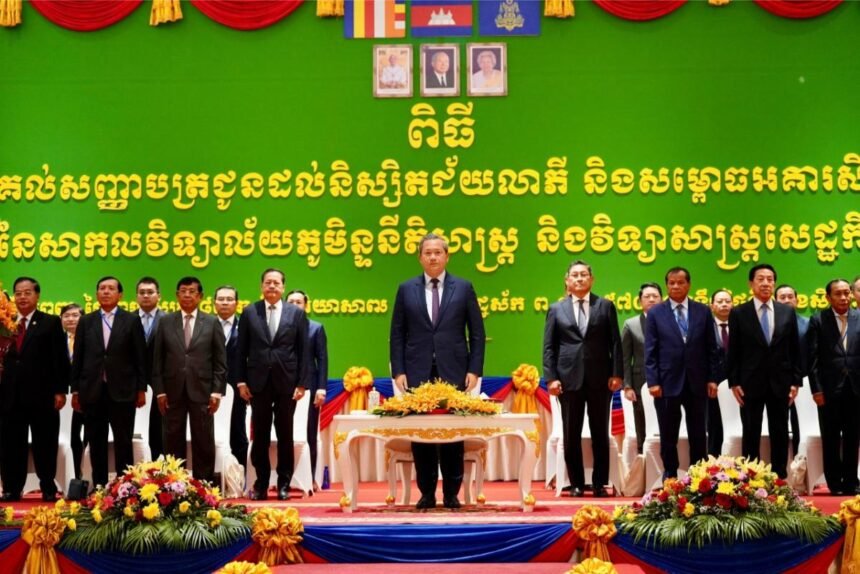
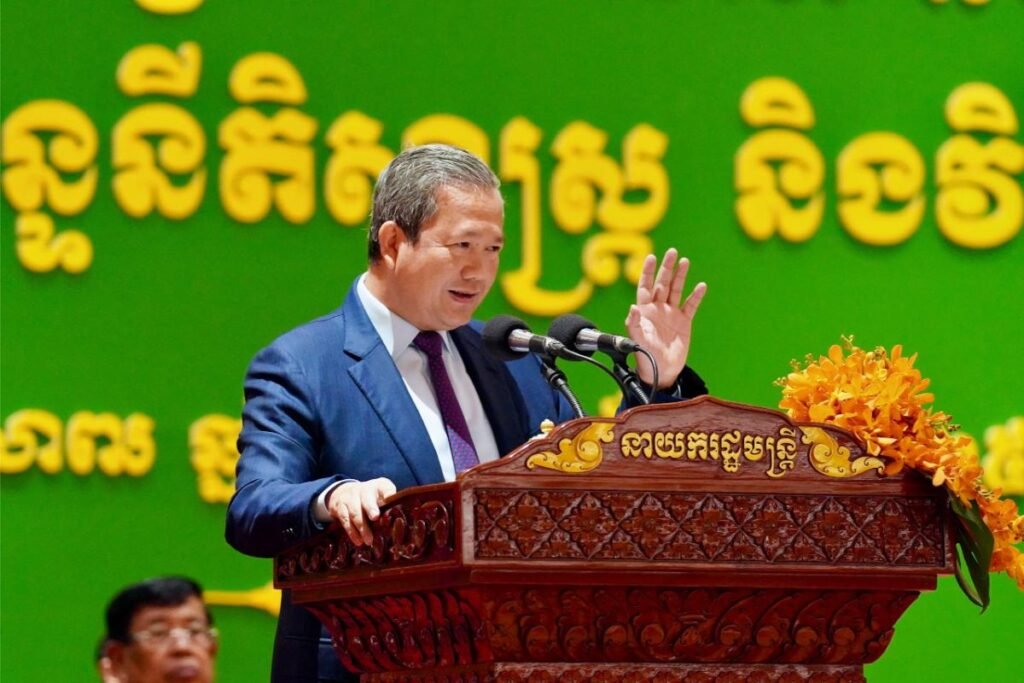
Speaking at the graduation ceremony for the Royal University of Law and Economics (RULE) in Phnom Penh, Prime Minister Hun Manet emphasized that modernizing the country’s education system is vital to equipping young Cambodians for rapid technological shifts and global market demands.
Strategic Pillars of the National Education Roadmap
The four priority directives established by the Prime Minister establish a structured framework for institutional reform across primary, secondary, and higher education levels:
1. Strengthening Digital Education Infrastructure
The government called for upgrading school digital infrastructure, building robust online learning platforms, and integrating technology-based instruction into classroom curricula. Strengthening school digital resources aims to bridge the digital divide and prepare students for the future labor market.
2. Strategic Investment in Human Capital
Prioritizing the development of a highly skilled and adaptable workforce remains a central focus. The strategy calls for continuous skill-building initiatives that respond to evolving economic landscapes, industrial automation, and international market competition.
3. Promoting Digital Literacy and Responsible Online Behavior
Expanding nationwide access to technology education is paired with an emphasis on digital ethics and responsible online behavior. The directive urges educational institutions to foster digital literacy as a core competency for lifelong learning.
4. Elevating Overall Educational Quality
To raise standards across all tiers, the government highlighted the importance of strengthening school leadership, modernizing curricula, upgrading teaching materials, and training educators in 21st-century pedagogical methods.
Empowering Higher Education and Academic Leadership
During his address, Prime Minister Hun Manet called on university leaders, faculty members, and academic staff to continuously upgrade their professional expertise, teaching methodologies, and research capacities.
He stressed that academic institutions must bridge theoretical knowledge with practical real-world application. By driving innovation and research competencies, higher education institutions can serve as catalysts for economic diversification and sustainable national development.
Also Read, Cambodia and United States Reaffirm Commitment to Deepen Trade and Investment Ties