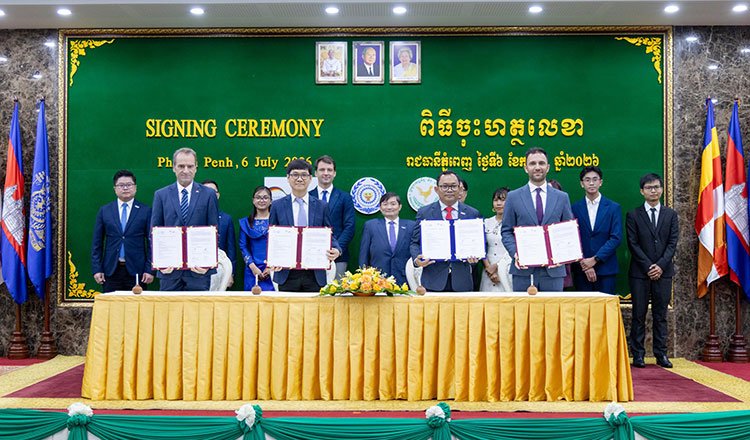
PHNOM PENH, CAMBODIA — The Royal Government of Cambodia has officially partnered with Germany to launch the second phase of a major technical cooperation project. Titled FABRIC Cambodia II, the initiative will dramatically accelerate sustainability pushes across the nation’s garment, footwear, and travel goods (GFT) sector. This strategic move comes as Western buyers tighten environmental and labour compliance rules worldwide.
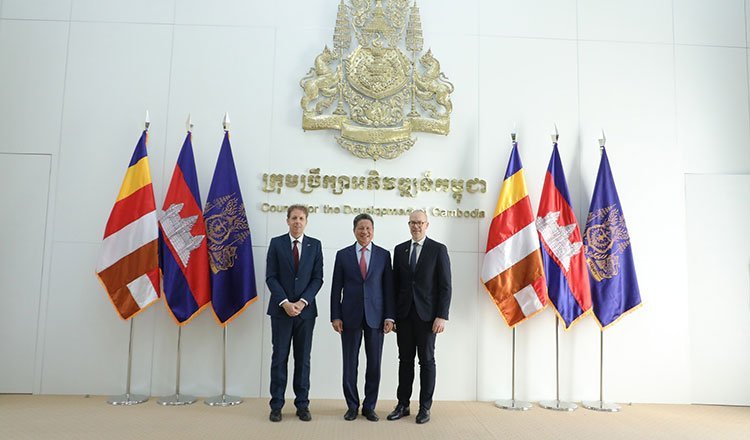
The formalization ceremony took place at the Ministry of Labour and Vocational Training. Key signatories included Cambodia’s labour and economy ministries alongside Germany’s GIZ development agency. Crucially, Minister of Labour Heng Sour and German Embassy Deputy Head of Mission Christof Weigelmeier directly oversaw the landmark agreement.
Navigating New Supply-Chain Legislation
The updated phase shifts focus from simple factory-floor audits toward complete systemic transparency. Therefore, it aims to embed long-term sustainability through intense public-private policy dialogues and continuous workforce training. Beyond direct project funding, GIZ will provide specialized technical expertise and policy advice. This targeted assistance will help local manufacturers comfortably navigate strict, upcoming European Union and German supply-chain laws.
“This is a partnership to future-proof our industry,” stated Minister Heng Sour. He noted that while the GFT sector heavily anchors Cambodia’s economy, it currently faces a “critical transition”. This pressure stems from the EU and US increasingly enforcing rigid Environmental, Social, Governance (ESG) criteria and human-rights due-diligence laws.
Preparing for the 2027 LDC Graduation
Maintaining rigorous regulatory compliance is no longer just an ethical choice; it is now a commercial necessity. Deputy Head of Mission Weigelmeier stressed that stronger ESG metrics directly boost Cambodia’s edge in hyper-competitive global networks.
This edge is particularly critical as Cambodia actively prepares to graduate from Least Developed Country (LDC) status in 2027. Consequently, this structural shift will phase out historical trade preferences. Once these preferences expire, meeting international environmental and labour standards will dictate market access.
Alignment with National Growth Roadmaps
The green garment push is not an isolated effort. Instead, it aligns seamlessly with Cambodia’s overarching economic agendas, including:
- The Pentagonal Strategy: Driving green industrial diversification, tech integration, and resilient infrastructure.
- GFT Development Roadmap 2022-2027: Prioritizing decent work environments, legal accountability, and manufacturing productivity.
By proactively modernizing factory workflows, Cambodia is setting a precedent for sustainable manufacturing in Southeast Asia. Ultimately, this strategic cooperation ensures that the Kingdom retains its elite global fashion buyers while successfully uplifting its domestic workforce.
Also Read, French Trade Minister to Visit Cambodia to Accelerate Bilateral Investment Pipelines