PHNOM PENH — Advanced Chinese automation technology and industrial machinery took center stage at a four-day international industrial exhibition in Phnom Penh, signaling a strategic shift toward smart manufacturing across the Kingdom’s production base.
Organized jointly by Yorkers Trade & Marketing Service Co. and Cambodia’s Ministry of Industry, Science, Technology and Innovation (MISTI), the trade show gathered more than 200 international exhibitors—heavily represented by Chinese firms specializing in robotics, automated machinery, textiles, plastics, and smart printing systems.
Urgency for Smart Manufacturing & AI Adoption
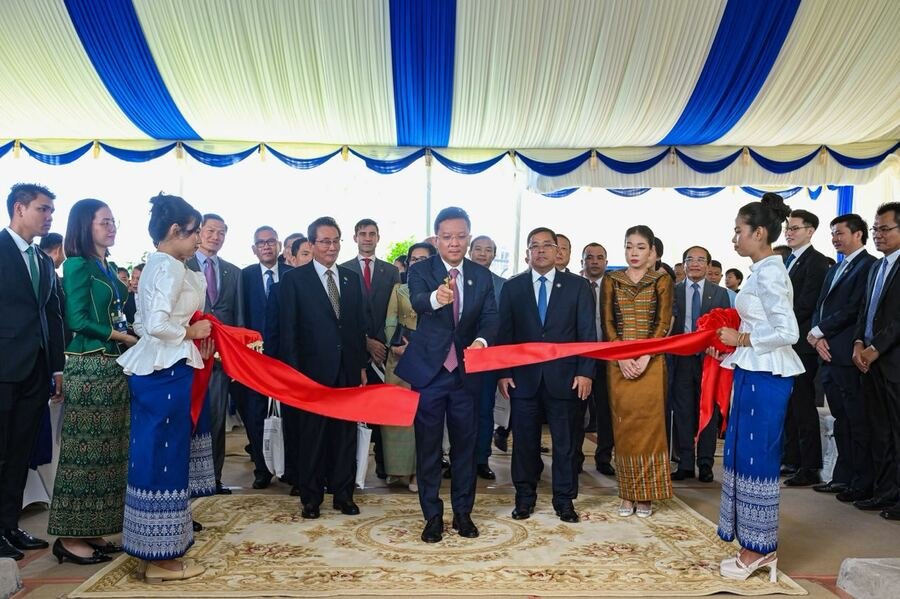
Speaking at the opening ceremony, Minister of Industry, Science, Technology and Innovation Hem Vanndy called on local Cambodian enterprises to rapidly adopt artificial intelligence (AI), robotics, and automated manufacturing systems to safeguard export competitiveness.
“Cambodia cannot remain outside this transformation. Adopting modern technology is necessary to lower operational costs, boost productivity, and improve export quality,” stated Minister Hem Vanndy.
Official data reveals that Cambodia currently operates 3,357 factories employing 1.35 million workers (over 70% of whom are women). Total industrial factory investment reached $28 billion—a 29% year-on-year surge compared to 2025—with first-half production exceeding $9.8 billion.
Shifting Beyond Garments to High-Value Production
Bilateral industrial cooperation between Cambodia and China is evolving beyond basic raw material trade into deep technological integration and machinery transfers.
Key Takeaways:
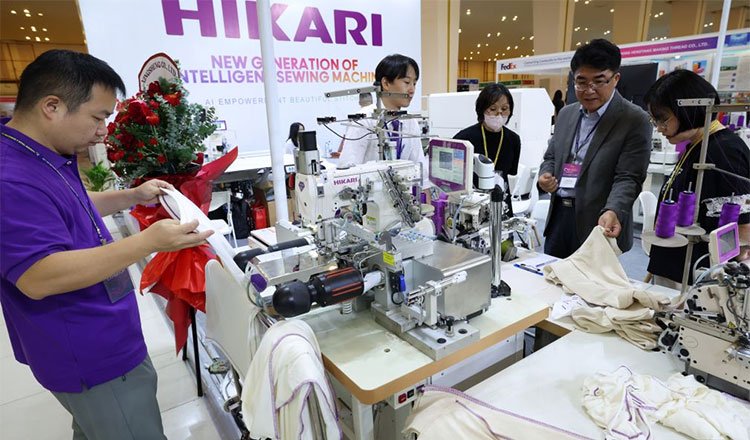
- Automation Demand: Local suppliers reported surging demand from Cambodian garment and textile factories for automated sewing and high-precision embroidery equipment manufactured in Shanghai.
- Productivity Gains: Integrating smart Chinese machinery helps factories eliminate human-error material waste, improve output per hour, and upskill local shop-floor workers.
- Workforce Upskilling: The technology transfer directly aligns with ongoing technical training initiatives, such as the Cambodia-China industrial robotics training programs aimed at preparing TVET instructors for Industry 4.0.
By embedding modern automation into its manufacturing base, Cambodia aims to diversify its industrial exports beyond traditional garments and establish itself as a higher-value production hub in Southeast Asia.
Also Read, Cambodia’s Digital Economy Contributes 1.8% of GDP, Asian Development Bank Report Shows