Cambodia’s top economic planning body is drafting a sweeping 10-year industrial strategy aimed at weaning the country off its dependence on low-cost, labor-intensive manufacturing and pushing it toward higher-skilled, technology-driven industries.
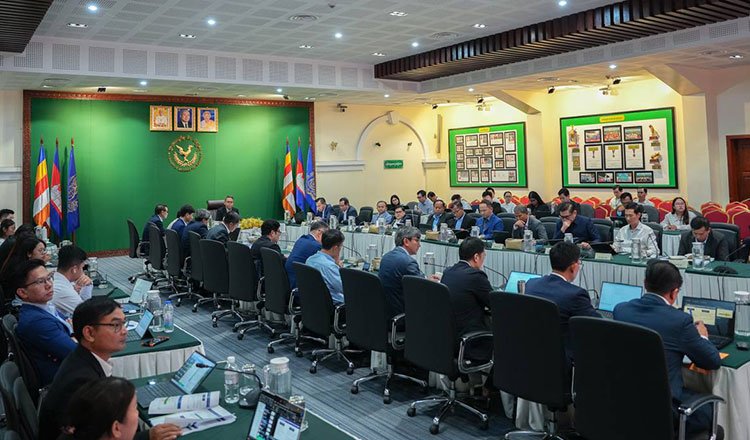
The Supreme National Economic Council is putting together the Industrial Development Policy 2026-2035, a roadmap that would reshape how Cambodia positions itself economically over the next decade. The draft was discussed Friday at an inter-ministerial meeting led by Hean Sahib, SNEC’s permanent vice-president and head of the working group steering the policy.
Officials from the Ministry of Economy and Finance and the Ministry of Commerce also took part, including Secretary of State Phan Phalla, Secretary of State Meas Soksensan, and Secretary of State Sok Sopheak, alongside SNEC members and technical staff involved in drafting the plan.
Work on the policy began in May 2025, according to a statement from the Economics and Finance Institute, an arm of the finance ministry. Since then, the drafting team has consulted with government ministries, development partners, and private-sector representatives, while also studying how other countries have handled similar industrial transitions.
“The IDP is a compass to guide Cambodia’s industrial development over the coming decade by addressing structural challenges, building a competitive industrial base, diversifying exports and strengthening linkages between foreign investment and domestic enterprises,” Sahib said.
A More Targeted Approach
Rather than pursuing industrial growth broadly, Sahib said the new policy will zero in on sectors where Cambodia already holds a competitive edge, rolling out development in stages calibrated to the country’s standing in global markets.
The draft lays out four core objectives: attracting higher-quality investment that generates skilled jobs and better wages; preserving the industrial gains that have underpinned Cambodia’s growth to date; building out supporting industries that lift productivity across the board; and preparing industry for future shocks, including tighter environmental standards.
Within that framework, the policy sorts target sectors into four buckets — existing industries, emerging industries, long-term strategic industries, and supporting industries tied to the circular economy — each paired with concrete, near-term policy actions rather than broad statements of intent.
Those measures rest on seven pillars, according to the finance ministry: coordinating investment promotion, expanding export markets, deepening industrial linkages and local sourcing, improving the business climate, building out infrastructure, developing labor-force skills and technology capacity, and widening access to finance.
“The policy would introduce concrete measures to make Cambodia’s industrial sector more diversified, resilient and competitive, contributing to economic growth and supporting the country’s vision of becoming a high-income economy by 2050,” Sahib said.
Friday’s meeting also pressed for sharper, more actionable measures and floated a “single-actor system” to streamline how the policy gets implemented across agencies. Officials singled out technology transfer and workforce skills as the connective tissue needed to turn research and innovation into real industrial output.
Building on a Decade of Gains
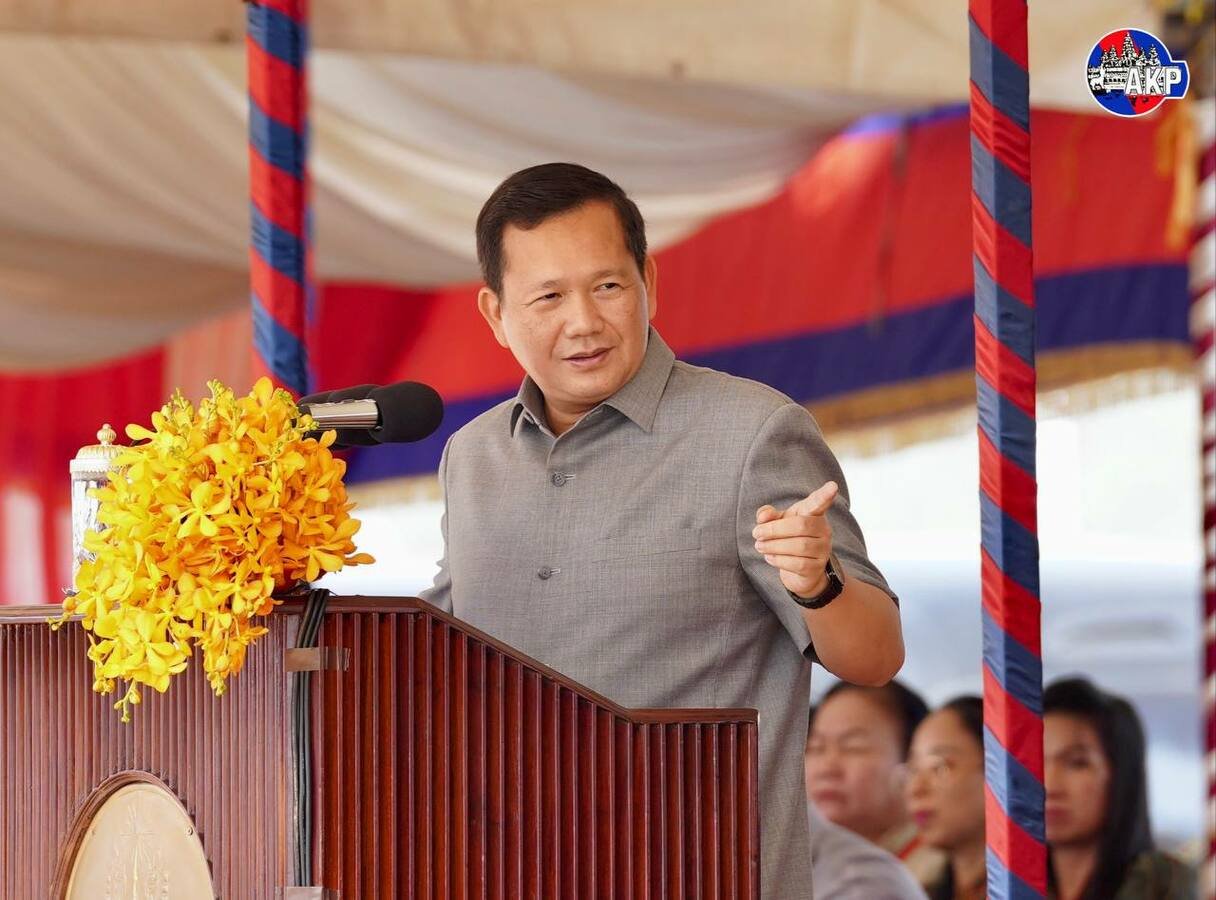
The new plan follows an earlier industrial policy that ran from 2015 to 2025. Speaking Thursday at the opening of a TH Automotive Manufacture (GAC) plant in Kampong Chhnang province, Prime Minister Hun Manet credited that earlier policy — alongside the Cambodia Automotive and Electronics Development Roadmap — with shifting the country’s industrial base toward higher-skilled, more technologically sophisticated production.
He pointed to gains in export diversification, with Cambodia now shipping more non-garment products such as bicycles, tires, electronic components, wiring, and auto parts.
But the prime minister framed the next decade as a tougher one to navigate. “Over the next decade, Cambodia will face greater uncertainties in geopolitics, the economy and international trade, while the country’s industrial sector is becoming increasingly complex and sophisticated,” he said, pointing to the rapid advance of artificial intelligence, the global push toward carbon neutrality, and Cambodia’s scheduled exit from Least Developed Country status in 2029 as pressures the new policy will need to account for.
“The Supreme National Economic Council must accelerate the preparation of the Cambodia Industrial Development Policy 2026-2035, with a focus on modernising Cambodia’s industrial structure from labour-intensive and low-skilled industries towards industries that rely on higher skills and advanced technologies,” Hun Manet said, adding that the plan must also tie Cambodia more closely into global and regional supply chains while building a diversified, resilient domestic industrial base.